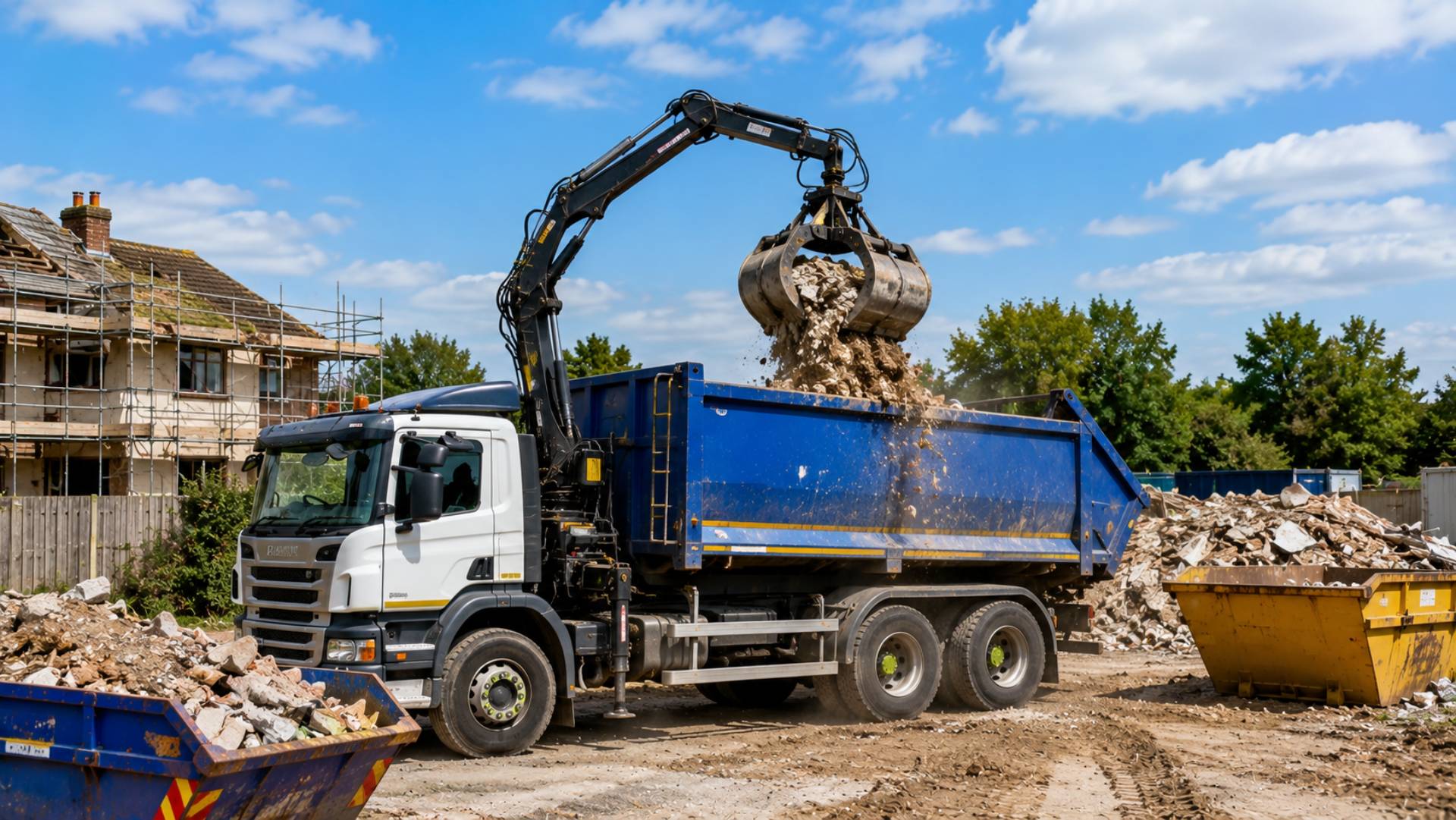
Large construction, landscaping and renovation projects can produce more waste than standard collection methods can handle. Piles of soil, rubble, concrete and garden material also take up valuable working space. A grab lorry provides a convenient way to load, collect and transport these materials without extensive manual handling.
What Is Grab Lorry Hire?
A grab lorry is a large waste collection vehicle fitted with a hydraulically operated arm and bucket. The arm lifts loose materials from the ground and places them directly into the vehicle’s container.
When arranging grab lorry hire Berkshire, customers should explain what materials they need removed, how much waste they have and where it is located. This information helps the provider select an appropriate vehicle and assess whether the grab arm can reach the waste safely.
Unlike a skip, a grab lorry does not usually remain at the property. It arrives at an agreed time, collects the prepared waste and transports it to an authorised facility.
How Does a Grab Lorry Work?
The vehicle must be parked on a suitable surface within reach of the waste. The trained operator then controls the hydraulic arm from the lorry, using its bucket to collect material from the prepared pile.
The arm may be able to reach over low fences, walls or other obstacles. However, its operating range is limited, and overhead cables, trees, parked vehicles or narrow roads can create access problems.
Before booking grab lorry hire Berkshire, customers should check road width, vehicle access and overhead clearance. Photographs of the site may help the provider assess the collection point in advance.
What Waste Can a Grab Lorry Remove?
Grab hire is commonly used for bulk waste removal from building sites, gardens and commercial premises. Materials frequently accepted include:
- Soil and clay
- Concrete and rubble
- Bricks and blocks
- Hardcore and stone
- Sand and gravel
- Green garden waste
- Certain mixed construction waste
Acceptance rules vary between waste carriers. Hazardous substances, asbestos, chemicals, liquids, gas cylinders, batteries and contaminated soil normally require specialist collection.
Plasterboard, timber and general rubbish may also need to be separated. Customers should describe every material accurately to avoid additional charges or a refused collection.
Where Is Grab Hire Most Useful?
Construction and Renovation
Building work can produce heavy materials that are difficult to move by hand. Grab lorries are suitable for removing rubble from extensions, demolitions, driveway installations and structural alterations.
Prompt waste collection helps prevent debris from obstructing working areas. It can also support safer site management by reducing loose material around access routes.
Landscaping Projects
Garden redesigns often generate substantial quantities of soil, turf, roots and old paving. A grab lorry can collect these materials mechanically, making it useful for patios, ponds, drainage work and changes to ground levels.
Green waste may be accepted, although branches and other bulky materials should be prepared according to the provider’s instructions.
Site Clearance
Grab lorries can support domestic and commercial site clearance where waste is already gathered in accessible piles. Their capacity makes them practical when smaller vehicles would require several journeys.
Key Benefits of Grab Lorry Hire
Faster Waste Removal
The hydraulic arm can load loose waste much faster than workers using shovels and wheelbarrows. This helps keep projects on schedule and allows tradespeople to focus on their main tasks.
Reduced Manual Labour
Soil, hardcore and broken concrete are heavy and physically demanding to move. Mechanical loading reduces lifting and carrying, although the site must still be prepared safely before collection.
Convenient Collection and Transportation
The same vehicle loads and transports the waste. Customers do not need to arrange separate machinery or make repeated journeys to a disposal facility.
Grab hire may also be useful where there is no suitable space to retain a skip. Because the vehicle normally leaves immediately after loading, it causes less long-term disruption to the property.
Choosing a Responsible Service
Use a waste carrier registered with the Environment Agency and ask where collected materials will be processed. Responsible providers should transport waste to authorised facilities and recover materials such as soil, aggregates, metal or green waste where practical.
Request a written quotation covering loading, transportation, disposal charges and VAT. Confirm any weight limits, waiting-time fees and restrictions before accepting the price.
Conclusion
Grab lorries offer a practical combination of mechanical loading, substantial capacity and immediate transportation. By checking access, separating materials and choosing a registered waste carrier, homeowners and professionals can manage large waste volumes more efficiently while keeping construction, landscaping and clearance projects organised.