
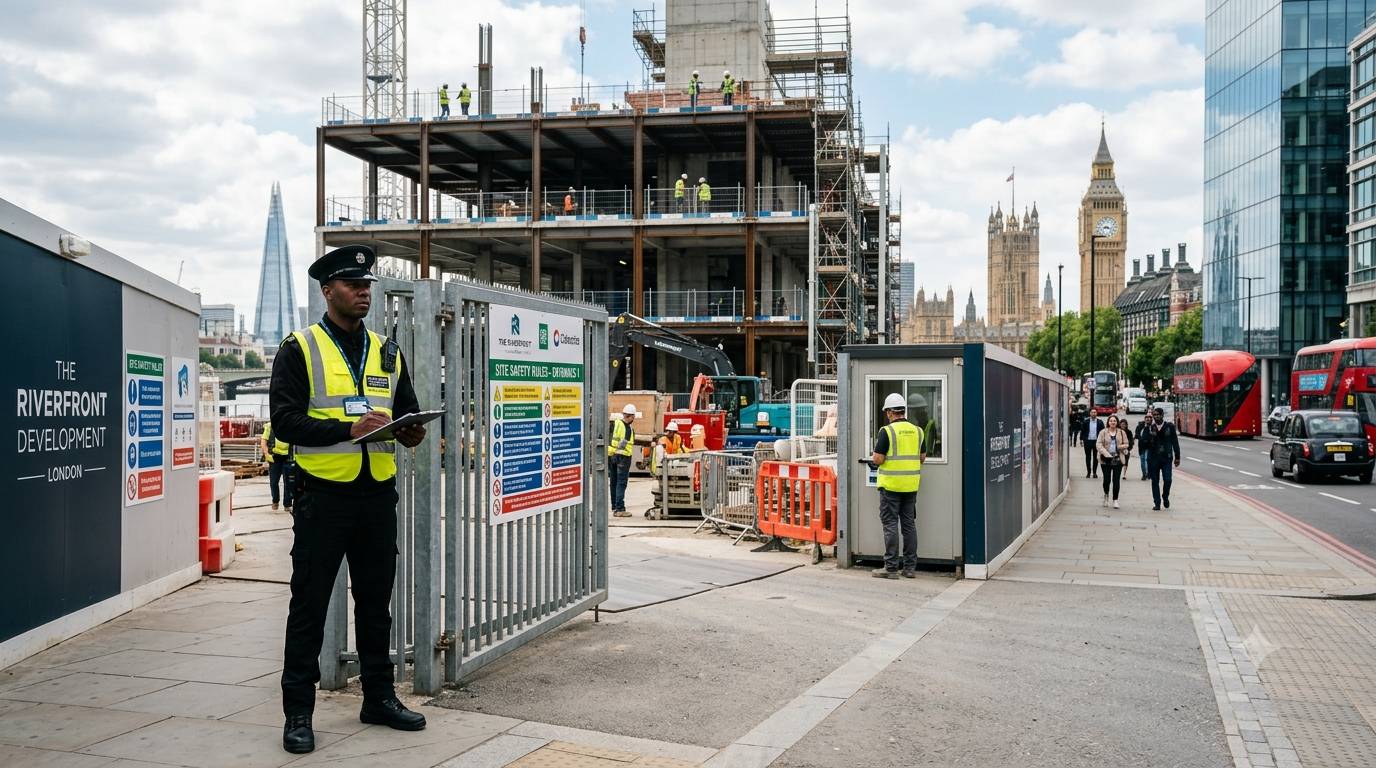
Manned guarding is more than placing a uniformed officer at an entrance. On a typical London site, trained security personnel control access, patrol key areas, respond to incidents and maintain clear records. This guide explains the day-to-day duties involved and how on-site guarding supports safer, better-managed premises for everyone daily.
Busy London premises often manage a constant flow of staff, visitors, contractors and deliveries. That makes reliable on-site security important. Professional manned guarding in London provides a visible presence while helping the site remain controlled and organised. Officers may monitor entrances, check identification, patrol designated areas, respond to alarms and record important activity. Their exact routine depends on the building, operating hours, footfall and security risks. Rather than following one fixed approach, guards work to agreed site instructions. The result is a service built around prevention, observation, communication and prompt action throughout each shift, while supporting normal daily operations safely.
Access Control Comes First
A large part of the role involves managing who enters and leaves the site. Officers can check identification, validate visitors and oversee contractors or deliveries in line with agreed procedures. This helps reduce unauthorised access without disrupting legitimate movement.
Site managers can make this process smoother by keeping visitor rules, authorised-person lists and contact details current. Clear information allows guards to make quicker, more consistent decisions.
Patrols Maintain Visibility Across the Site
Security officers also carry out internal and external patrols. These checks may cover entrances, shared areas, site boundaries and restricted spaces identified in the security plan. A visible patrol can discourage unwanted behaviour while helping officers notice unusual activity early.
Where required, guards may also lock and unlock facilities as part of the agreed service. Consistent routines are especially useful on sites with extended operating hours or changing access needs.
Alarm and Incident Response
One important benefit of manned guarding in London is having trained personnel already present when an alarm or security concern occurs. Officers can assess the situation, follow site procedures and communicate with the appropriate contacts without waiting for someone to arrive.
They can also work alongside CCTV, alarms and access-control systems. Radios and digital reporting tools support communication and help keep a clear record of activity.
Reporting and Professional Standards
Accurate reporting is another important part of guarding. Officers can record incidents, patrol activity and relevant events during a shift. These records help management understand what happened and identify repeated security concerns.
The provider states that it is an SIA-approved contractor and that its guards receive Action Counters Terrorism training. For businesses, the practical lesson is simple: choose guarding arrangements that match the site’s layout, risks, operating hours and daily activity.
FAQs
Q.1 Can manned guards manage visitors and contractors?
Ans: Yes. Their duties can include checking identification, validating visitors and supervising contractor or delivery access according to site procedures.
Q.2 Do guards work with CCTV and alarms?
Ans: Yes. Officers can respond to alerts from existing security systems and take action according to agreed site instructions.
Q.3 Can manned guarding cover a site around the clock?
Ans: Yes. Round-the-clock guarding can be arranged where continuous on-site protection is required.
Q.4 What areas do security officers patrol?
Ans: Patrol routes depend on the site but may include entrances, internal spaces, external areas, boundaries and restricted zones.
Q.5 What should a business prepare before deployment?
Ans: Provide clear access rules, emergency procedures, key contacts, restricted-area information and up-to-date site instructions.
Final Thoughts
Manned guarding on a typical London site involves far more than standing at an entrance. Officers can control access, validate visitors, patrol internal and external areas, respond to alarms, supervise deliveries, protect restricted spaces and keep accurate records. Their presence adds an immediate human response to security arrangements and helps ensure that concerns are handled according to clear procedures.
For site managers, preparation makes a major difference. Access rules, patrol priorities, emergency instructions and reporting expectations should be agreed before deployment and reviewed when operations change. This gives officers the information they need to work consistently and effectively. When tailored to the premises and supported by clear communication, manned guarding in London offers a visible, structured and responsive way to protect people, property and assets while helping the site continue its normal daily activities with fewer avoidable security gaps.